
Black Flag Resynced Tailing and Eavesdropping: What Happens When You Fail
The short answer
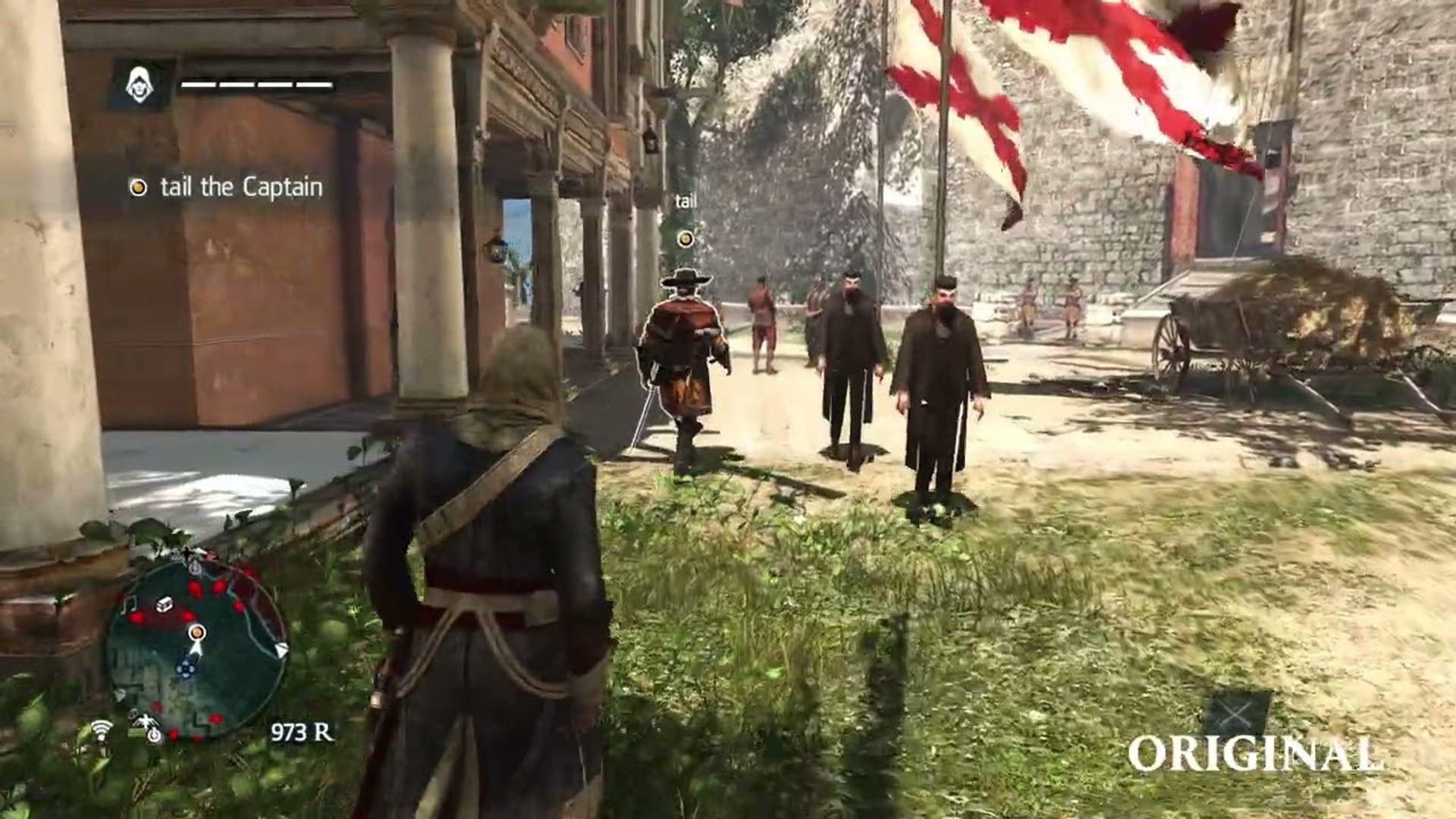
Failing a tailing or eavesdropping objective in Black Flag Resynced no longer automatically desynchronizes you. If you are spotted too early or lose the target, the mission can switch to another route: fight and search a defeated enemy for a note, chase the target, take them out, or investigate elsewhere. The correct reaction is to read the new objective, not reflexively reload.
That is a major change from the original Black Flag. It does not mean every stealth mistake is consequence-free. It means the game is more interested in letting you complete the information problem through a different method than in sending you back to the last checkpoint for failing one narrow script.
Stop treating the alert as a reset screen
The old habit is understandable: a tailing objective goes wrong, the target notices Edward, and you immediately expect desynchronization. In Resynced, pause for one beat and look at the objective text. Ubisoft says the mission can now redirect you after being caught early or losing sight of a target for too long.
Possible follow-ups include entering combat to locate a note on a defeated enemy, chasing down and eliminating the target, or continuing an investigation in a different place. These are not random consolation prizes. They are intended alternate routes to the same information.
The practical rule is: do not reload until you know whether the mission has actually failed. Reloading out of habit can discard a perfectly valid path and turn a forgiving redesign back into the old punishment.
How to tail before things go wrong
The new flexibility is not a reason to abandon stealth. A quiet tail still gives you better control, more time to observe, and less chaos around the target. Start with a route that preserves options:
- Keep enough distance that one abrupt stop does not put Edward directly in view.
- Use height only when it gives a clean continuation, not because every roof is automatically safe.
- Track nearby guards and cover before the objective reaches them.
- Avoid committing to an assassination or open fight until you understand what the target is carrying or where the next marker leads.
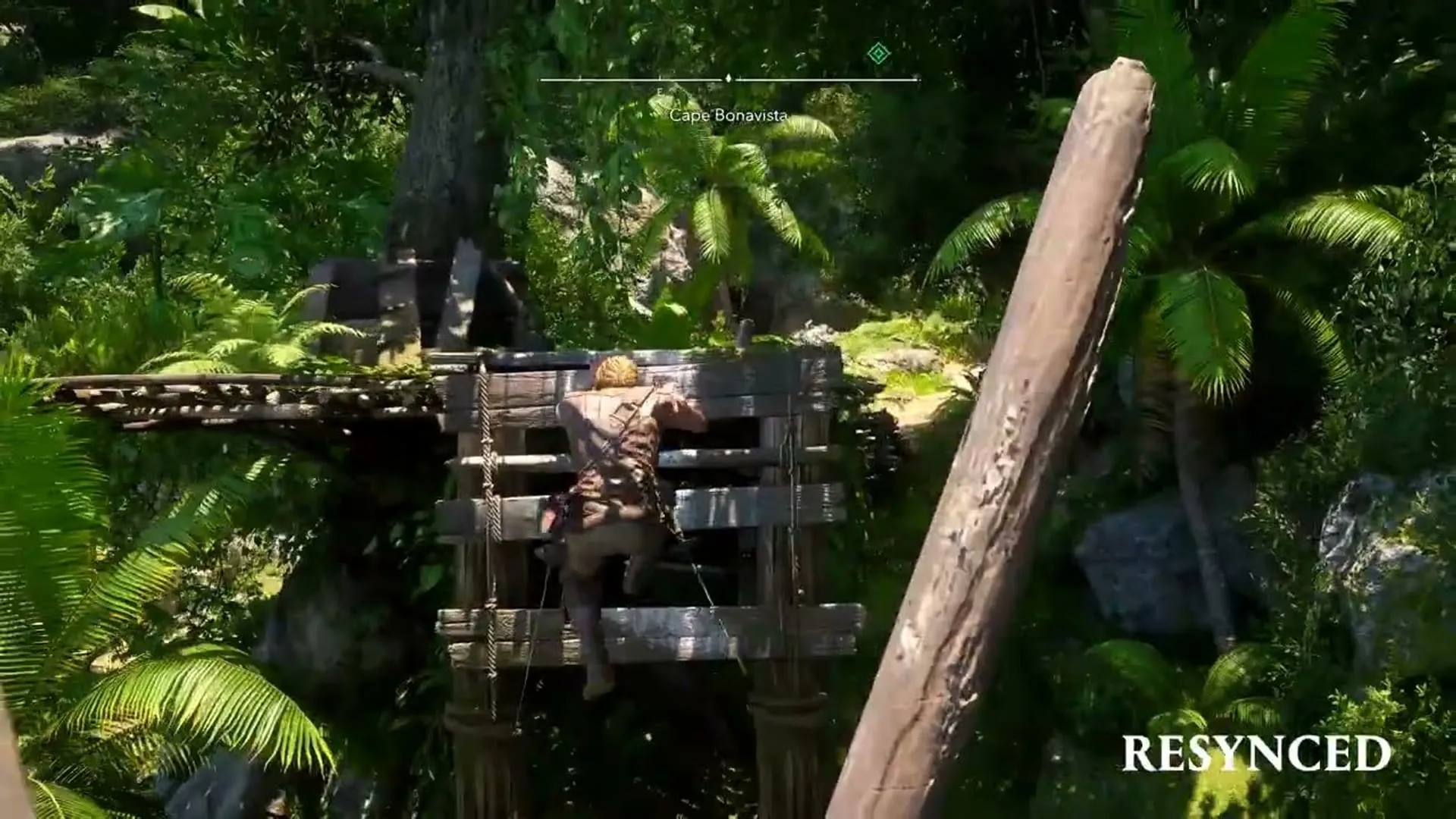
Resynced’s updated parkour is built to provide more coherent routes, but movement is still a means to information. The best route is the one that leaves you with a second choice when the first one closes.
If you are spotted: choose the new objective, not the old fantasy
When the mission switches, stop trying to reconstruct the perfect unseen tail that no longer exists. If the game asks you to find a note on an enemy, take the combat route efficiently. If it asks you to chase, prioritize line of sight and pathing over stealth takedowns. If it opens a new investigation, slow down and search the designated area rather than sprinting after a target who has already left the script.
This is the editorial difference between resilience and panic. The objective is not to prove that you can undo the alert. The objective is to get the information and move the story forward.
Combat fallback: make it controlled
An alternate route can turn a stealth mission into a fight, but it does not ask you to brawl blindly. Use the same combat priorities as elsewhere: identify the enemy who is making the arena dangerous, answer parryable attacks with a parry, dodge unblockable pressure, and use tools to disrupt ranged targets or break defense.
If a captain or soldier has the note you need, do not waste time clearing every peripheral enemy first. Create an opening on the priority target, retrieve the clue, and reassess the objective. The Rope Dart guide is useful here because early access gives you another way to interrupt an inconvenient enemy without relying on an extended sword exchange.
Chase fallback: preserve the route
Chases are not won by pressing forward more aggressively than the target. Watch the route, keep the camera useful, and avoid a spectacular jump that sacrifices the next landing. Resynced revisits parkour paths and mission layouts to make traversal more intuitive, but the target can still gain ground if you choose the dramatic line over the stable one.
When a chase begins, prioritize continuity: a lower route you can maintain is better than a high route that forces a stop. Use nearby geometry to keep the target in sight, and do not turn a small detour into a full combat detour unless the mission explicitly asks for it.
Investigation fallback: take the hint seriously
An alternate investigation route is the game telling you that the information exists somewhere other than the person you were following. Search with intention. Look for the new marker, the named area, or an enemy connected to the objective. Do not keep shadowing a target who is no longer the answer simply because that was the original plan.
This is also where Resynced’s Observe mode and revised stealth systems earn their place. Use awareness to identify the actionable path rather than treating a failed tail as a generic open-world fight.
What the change does not mean
It does not mean every mission accepts every action. You can still lose a chase, die in combat, or create more trouble than the alternate route can absorb. It also does not mean stealth is obsolete. A clean tail is often faster and calmer. The change means a single detection event no longer has to erase the preceding minutes of play.
That is a better design for both newcomers and returning players. New players get room to recover. Veterans get permission to experiment with a different tool or route rather than repeating the same exact choreography until it works.
The practical takeaway
Tail cleanly when you can, but when the alert happens, read the new objective before touching reload. Fight for the note, chase the target, or investigate the new location. Resynced finally treats the mission’s information as the goal and the original stealth path as one good way to reach it.
Sources
← Back to Guides