
How to Recreate Classic 2013 Controls in Assassin's Creed Black Flag Resynced
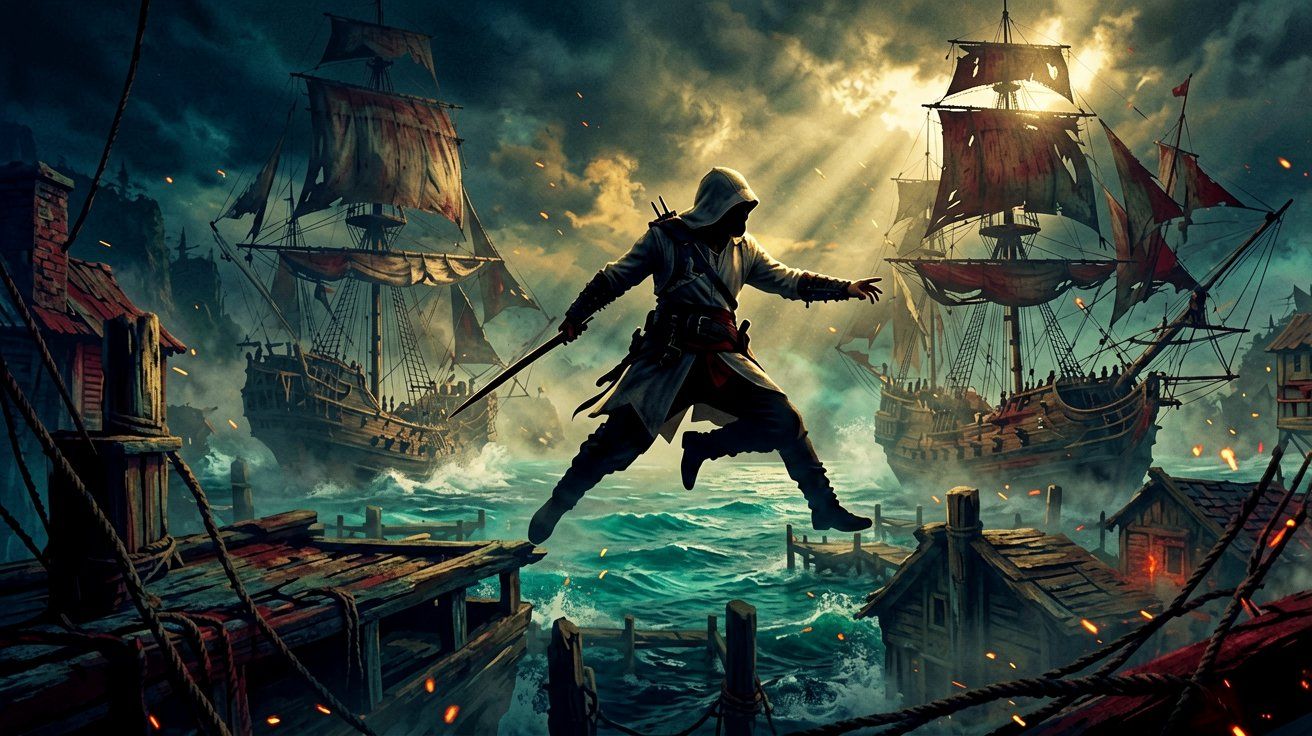
Assassin’s Creed Black Flag Resynced has successfully brought the Golden Age of Piracy to a modern generation, completely rebuilding the Caribbean adventure from the ground up on the latest Anvil engine. With a community-reported statistic suggesting that around 70% of the active player base already owned the 2013 masterpiece, nostalgia is running high on the high seas. However, this “zero original code” remake also brings entirely modernized gameplay mechanics—including an expanded stealth system, overhauled parkour algorithms, and a counter-heavy combat flow.
While these modernizations make the Caribbean feel incredibly fresh and responsive, many veteran captains find their deep-seated muscle memory fighting against the new default control layouts. If you find yourself accidentally crouching when you meant to sprint, or dropping from a ledge instead of assassinating a guard, you are not alone. The community has been hard at work experimenting with keybinds, and we now have a highly functional Legacy/Hybrid control scheme that perfectly bridges the gap between the original release and the ambitious remake.
Understanding the Modern vs. Classic Controls
When Ubisoft Singapore designed the control scheme for Black Flag Resynced, they aimed to align the inputs more closely with recent titles in the franchise, largely removing the “puppeteer” input philosophy that defined the Ezio and Kenway eras. In the 2013 release, the right trigger acted as the universal “high profile” modifier—holding it down transformed your safe, low-profile actions into aggressive, high-profile maneuvers like sprinting, free-running across massive gaps, and triggering lethal aerial assassinations.
The new default layout opts for a more standardized action-RPG format. While this is intuitive for newcomers joining the Brotherhood for the first time, veterans who spent hundreds of hours commanding the Jackdaw and navigating the colonial rooftops of Havana often feel a strange disconnect. Rebuilding your muscle memory from scratch can be deeply frustrating when the visual language of the game is so heavily steeped in the classic aesthetic.
By remapping your controller to a carefully curated Legacy Hybrid scheme, you can reclaim that classic rhythmic flow while still maintaining access to all of the remake’s entirely new mechanics.
The Ultimate Legacy / Hybrid Control Scheme Setup
This custom setup, heavily inspired by rigorous community testing and player-submitted layouts, aims to restore the High Profile sprint while smoothly accommodating the new stealth additions. Note that we will use Xbox controller terminology here, but these map directly to the corresponding buttons on the PlayStation 5 DualSense (where A = Cross, B = Circle, X = Square, and Y = Triangle).
Movement & Navigation
- Character Control: Left Stick
- Sprint / Free Run (High Profile): Hold Right Trigger (RT)
- Parkour Up / Jump: Press A (while holding RT)
- Parkour Down / Drop: Press B (while holding RT)
- Crouch / Enter Stealth: Press R3 (Right Stick Click)
Combat & Assassination
- Primary Attack: Combined / Press X
- Assassinate / Hidden Blade: Press Y
- Lock Target: Press RB / L3 / LT (Auto)
By returning the sprint function to the Right Trigger, you immediately re-establish the classic rhythm of holding a trigger to enter an active state, using the lower face buttons to navigate vertically across the environment. You can read more about how verticality works in our parkour overview. Moving the dedicated crouch button—a mechanical feature that didn’t exist in the 2013 original but is absolutely vital for the remake’s expanded stealth mechanics—to R3 keeps it accessible without interrupting your thumbs’ placement on the face buttons during intense platforming sequences. You can transition seamlessly from a high-profile sprint into a silent crouch inside a stalking zone. For deeper insights on staying hidden, check out our stealth breakdown.
How Legacy Controls Impact the Overhauled Combat
The melee encounters in the remake have been completely rebuilt from scratch. As previously confirmed by the development team, this remake rejects the hitbox-driven, stat-heavy combat seen in recent RPG entries, opting instead for a highly rhythmic, animation-heavy system centered around split-second parrying and brutal counter-attacks. Because of this specific design philosophy, mapping your primary attack to the traditional X button and your assassinations to the Y button feels incredibly natural and highly responsive.
When you are surrounded by heavily armored British guards in Kingston or fighting rival pirate captains on the blood-soaked deck of a galleon, the Legacy Hybrid controls allow you to seamlessly weave between aggressive dual-sword strikes and precise, lethal counters. Our dedicated combat page details just how vital these parries are to surviving ambushes. Furthermore, reintroducing the RT-to-sprint mechanic means you can instantly break out of a disadvantageous combat scenario to perform a quick parkour escape up a nearby mast or fortress wall, without fumbling for a thumbstick click under immense pressure.
Dealing with Conflicting Binding Warnings
When inputting this specific layout into the game’s settings menu, the UI will reportedly flag several “conflicting bindings” with a bright red warning icon. Because the modern Anvil engine attempts to streamline contextual actions to prevent overlap, separating them out manually can confuse the menu’s internal validation check.
Do not let these warnings deter you. Rigorous community testing confirms that this setup functions flawlessly in the open world, with zero input overlap during actual gameplay. You will not experience dropped inputs or stuck animation states; simply acknowledge the warning prompt, save your custom preset, and return to exploring the Caribbean.
A Crucial Warning for Naval Combat Veterans: The Pirate Hunter Bug
If you are tweaking your controls to master the seas just like the old days, you will likely be spending a significant amount of your playtime taking over enemy vessels to upgrade the Jackdaw. To fully master the art of ship-to-ship warfare, review our naval guide. However, an urgent bug has recently been community-reported regarding Pirate Hunters—the relentless, heavily-armed mercenary ships that actively track and hunt the Jackdaw once your wanted level rises to dangerous heights.
When engaging these aggressive Hunters, many naval veterans rely on the classic tactic of softening up the target with Mortar fire right before initiating the boarding sequence. You must be extremely careful when doing this in the remake. If you strike a Pirate Hunter with mortars just as you are boarding them—specifically if the enemy ship has not actively initiated its own attack sequence or aggro state yet—it can cause the enemy ship and its entire crew to become permanently frozen.
This technical soft-lock prevents you from completing the active boarding objectives. You will be unable to kill the required number of crew members, meaning you can neither claim the precious cargo nor use the captured ship to repair the Jackdaw. Until a hotfix is deployed to address this scripting error (a formal bug report has already been logged on the Ubisoft bug tracker as issue ACBFR-5304), we highly recommend completely avoiding mortar strikes during your final approach on Hunters. Rely strictly on heavy shot and swivel guns when you are within close boarding range to ensure a smooth transition from naval warfare to hand-to-hand deck combat.
The Missing Sea Shanty Mystery: Where is Derby Ram?
Finally, what is a true pirate experience without the legendary sea shanties echoing across the ocean waves? Whether you are playing with modern inputs or our recommended legacy controls, hearing your newly recruited officers and crew singing in unison is an undeniable highlight of the remake. You can browse the full list of available songs in our sea shanties index.
Recently, detail-oriented fans noticed an unusual discrepancy between the actual game and the official soundtrack releases. The beloved, upbeat shanty “Derby Ram” is fully present and sung by the crew in-game, yet it is inexplicably missing from the Assassin’s Creed Black Flag: Resynced – Sea Shanties Ultimate Collection currently available on major streaming platforms like Apple Music and Spotify.
While it is highly likely a simple licensing oversight or an accidental omission by the music label during track compilation, it has sparked quite the discussion among the community. The Animus apparently wants to keep this specific track a well-guarded secret. If you want to hear the tall tale of the giant ram, you will not find it on your daily commute streaming playlist—you will have to boot up the game, set sail on the Jackdaw, and command your crew to sing it out on the open water.
Reclaiming the Golden Age
Assassin’s Creed Black Flag Resynced is a phenomenal, visually stunning modernization of a beloved genre classic. By taking just a few minutes in the options menu to carefully configure a Legacy Hybrid control scheme, you can fully enjoy the breathtaking visual overhaul, the zero-original-code engine physics, and the terrifyingly dynamic weather systems without sacrificing the tactile, nostalgic feel of 2013. Just remember to hold your mortar fire when boarding those dangerous Pirate Hunters, and enjoy the exclusive in-game performance of “Derby Ram” as you sail into the sunset.
Sources
← Back to News