
Adjusting to Black Flag Resynced: Combat Flow, UI Changes, and PS5 Pro Load Times Explained
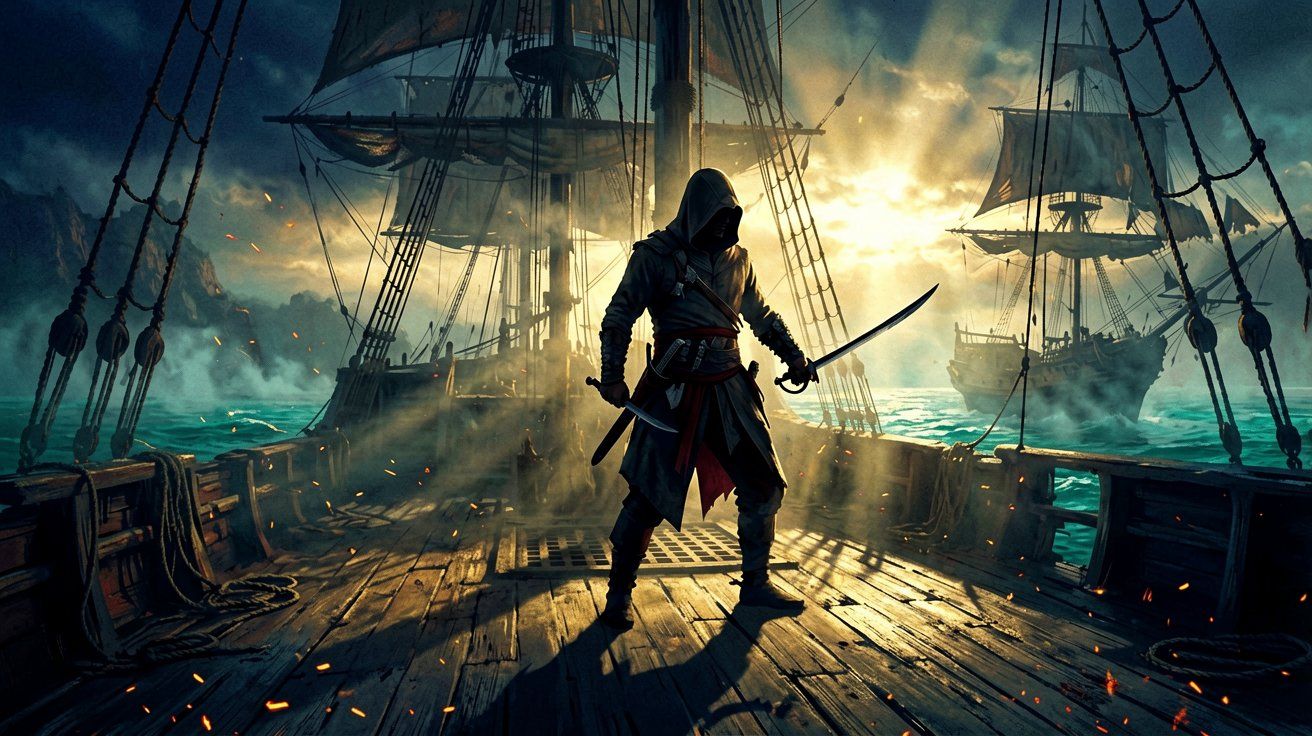
Welcome back to the Caribbean. It has been a little over a month since Assassin’s Creed Black Flag Resynced launched. While the initial honeymoon phase of marveling at the gorgeous turquoise waters and newly recorded sea shanties has largely passed, the community is now deep into the mechanical weeds. If you are a veteran of the 2013 original, you might have noticed that despite the familiar setting, the “zero original code” philosophy employed by Ubisoft Singapore means the game feels fundamentally different in your hands.
From the rhythm of naval boarding actions to the literal seconds it takes to boot up the game on a PlayStation 5 Pro, there is a distinct learning curve to this modern Anvil engine iteration. Returning players are finding that muscle memory from a decade ago can sometimes be more of a hindrance than a help.
In this comprehensive guide, we are going to break down the most prominent mechanical and technical shifts the community is currently debating. We will cover how to adjust your timing for the revamped combat system, explain why the UI and movement feel significantly heavier compared to recent titles like Assassin’s Creed Shadows, and solve the technical mystery behind those surprisingly long PS5 Pro loading times.
Rethinking Combat: From Instant Counters to Methodical Parries
One of the most heavily discussed topics across community forums right now is the evolution of the combat system. In the 2013 original, Edward Kenway was essentially an unstoppable force of nature. The combat relied heavily on a smooth, highly forgiving counter-kill system. You could confidently stand in a circle of British soldiers, wait for the red attack indicator to flash over an enemy’s head, press a single button, and trigger a lengthy, cinematic, instant-kill animation. It was a stylish, albeit simple, dance of death that allowed players to wipe out entire forts without breaking a sweat.
Resynced completely changes this paradigm. The developers have actively tried to inject much more depth into the melee encounters, stepping away from the instant-gratification counter system. As many returning players have pointed out, the combat now operates on a strict stagger-and-takedown economy. Instead of a natural, unbreakable flow where one kill leads seamlessly into the next, you are now required to actively break an enemy’s defense through heavy slashes, or wait for a precise parry window to open them up for a takedown.
How to Adapt Your Playstyle:
If you find yourself frustrated by the new rhythm, the trick is to stop treating Resynced like a classic legacy title.
- Aggression is Key: Do not wait to be attacked. The old strategy of turtling up and waiting for a counter will only result in you being swarmed, grappled, or shot from a distance. You must take the initiative to break enemy guards using your heavy attacks and environmental pushes.
- Understand the Takedown Pipeline: A successful parry no longer guarantees an instant kill, especially on higher-tier enemies like Brutes or Captains. Instead, a parry opens a brief vulnerability window. You must follow up with standard strikes to drain their stamina and defense before the lethal takedown prompt even appears. Parries are now combo starters, not fight enders.
- Prioritize Crowd Control Over Chain Kills: Since you cannot effortlessly chain-kill ten enemies in a row anymore, you need to actively utilize your pirate toolkit. Smoke bombs, rope darts, and your flintlock pistols are more crucial than ever for thinning the herd before you commit to close-quarters swordplay.
For a deeper dive into optimizing your weapon loadouts and mastering the nuances of the new engine’s hitboxes, check out our dedicated combat overview.
Navigation and UI: The ‘Heavy’ Feel vs. Assassin’s Creed Shadows
Another fascinating point of comparison emerging from the community is how Black Flag Resynced stacks up against Assassin’s Creed Shadows in terms of sheer responsiveness. Players who have recently jumped back into Shadows after securing their Platinum trophy in Resynced have reported a stark contrast in the game feel.
Shadows features incredibly snappy menus and lightning-fast movement, perfectly tailored to its dual-protagonist shinobi and samurai fantasy. Resynced, on the other hand, leans heavily into the physical reality of being a heavily armed, somewhat rugged pirate in the 18th century. Edward’s movements have a deliberate, undeniable weight to them. You cannot turn on a dime, and scaling a ship’s mainmast requires a visual commitment to the animations.
This weight extends directly into the in-game menus. The Animus interface, the crafting tabs, and the vendor screens in Resynced are slightly more methodical, seemingly prioritizing immersion and visual flair over the instantaneous swapping found in Shadows.
Adjusting Your Parkour Expectations:
To master movement in Resynced, you must anticipate your path. The heavy momentum means that last-second directional changes will likely result in Edward leaping into a haystack—or worse, plummeting onto the unforgiving pavement of Havana. Plan your routes, utilize the newly implemented climbing mechanics, and embrace the grounded reality of the Anvil engine. If you are struggling with the traversal mechanics, you can learn how to optimize your routes in our parkour guide.
The Menu Experience and The Missing Music
Let’s talk about the cold boot. When you fired up the original Black Flag, you were greeted by an iconic, swelling musical score that immediately set the tone for an epic high-seas adventure. It was a legendary piece of music that gave players chills before they even pressed a button.
The modernized launching experience in Resynced has proven to be a surprisingly sensitive point of contention. The new unified menu UI is undeniably sleek and functional, bringing it in line with the modern franchise hub, but it operates in near silence. This has led some hardcore fans to label the new startup sequence as “generic” or “mundane.”
The community misses the immediate auditory impact of the original title screen so much that dedicated fans have actually begun creating and sharing custom-edited title card transitions online to inject a bit more cinematic flair into the game’s startup sequence. While this missing music does not impact the moment-to-moment gameplay, it serves as a massive reminder of how deeply the audio-visual presentation of the original is ingrained in the fanbase’s collective memory.
The Truth About PS5 Pro Loading Times
Perhaps the most surprising technical revelation discussed by the community this week involves the game’s loading times. Dedicated players have run side-by-side video comparisons of the game’s launch sequence, and the results are entirely counter-intuitive.
Booting Black Flag Resynced from the PlayStation 5 Pro’s lightning-fast internal NVMe SSD takes approximately 1 minute and 7 seconds to reach actual gameplay. Astonishingly, launching the original 2013 game from an aging external Hard Disk Drive takes about 1 minute and 5 seconds.
Why is a cutting-edge remake utilizing top-tier SSD hardware seemingly slower to boot than a decade-old game running on older storage tech?
The answer lies in how the new Anvil engine handles world-building and memory management. As we covered previously, the developers have fundamentally rebuilt the Caribbean as a seamless world. In the 2013 original, the game loaded very small, instanced chunks of the world. Getting off the wheel of your ship, entering a major city like Kingston, or fast-traveling triggered completely separate, albeit short, loading screens.
Resynced attempts to eliminate those gameplay interruptions entirely. That 1-minute and 7-second initial boot time on the PS5 Pro is performing an immense amount of heavy lifting: it is pre-loading massive high-resolution textures, compiling real-time shaders, and streaming a vast, interconnected chunk of the Caribbean ecosystem directly into the console’s memory RAM.
You are essentially paying the loading toll entirely upfront. Once you are actually in the game, the transition from steering the Jackdaw through a hurricane, to diving underwater for treasure, to storming a heavily armed coastal fort is entirely seamless. So, while the initial cold boot wait might feel agonizingly long for a current-generation title, it is a necessary technical compromise for the uninterrupted, immersive exploration that follows.
New Easter Eggs and the “Overdesign” Trophy
Ubisoft Singapore promised a highly faithful recreation, but they clearly couldn’t resist hiding a few new secrets for the community to hunt down. This week, explorers have reported stumbling across an unusual, unlisted environmental scene hidden in the world that strongly mimics the famous iceberg discovery sequence from the animated series Avatar: The Last Airbender. While Ubisoft has not officially commented on this homage, community-reported findings like this prove that the world still holds surprises even for veterans who know the original 2013 map by heart.
Furthermore, trophy hunters are breathing a massive sigh of relief regarding the game’s achievement list. The infamous “Overdesign” trophy—a moniker that strikes absolute fear into the hearts of Origins and Valhalla completionists due to its historically convoluted and frustrating combat requirements—has made a return in Resynced.
However, players are reporting that the requirements are surprisingly straightforward this time around. Many are unlocking it naturally during standard fort sieges without requiring the elaborate, mind-bending setups of previous games. If you are currently struggling with other, more difficult challenges on your path to 100% completion, be sure to consult our platinum tips and exploits guide for help with bugged missions and fleet management.
Assassin’s Creed Black Flag Resynced is undeniably a triumph of modern gaming technology, but it firmly demands that veteran players unlearn a decade of established muscle memory. By embracing the deliberate, weighty combat pacing, understanding the grounded movement system, and recognizing that the upfront technical trade-offs result in a vastly superior seamless open world, you will likely find that the golden age of piracy has never been more captivating.
Sources
← Back to News